




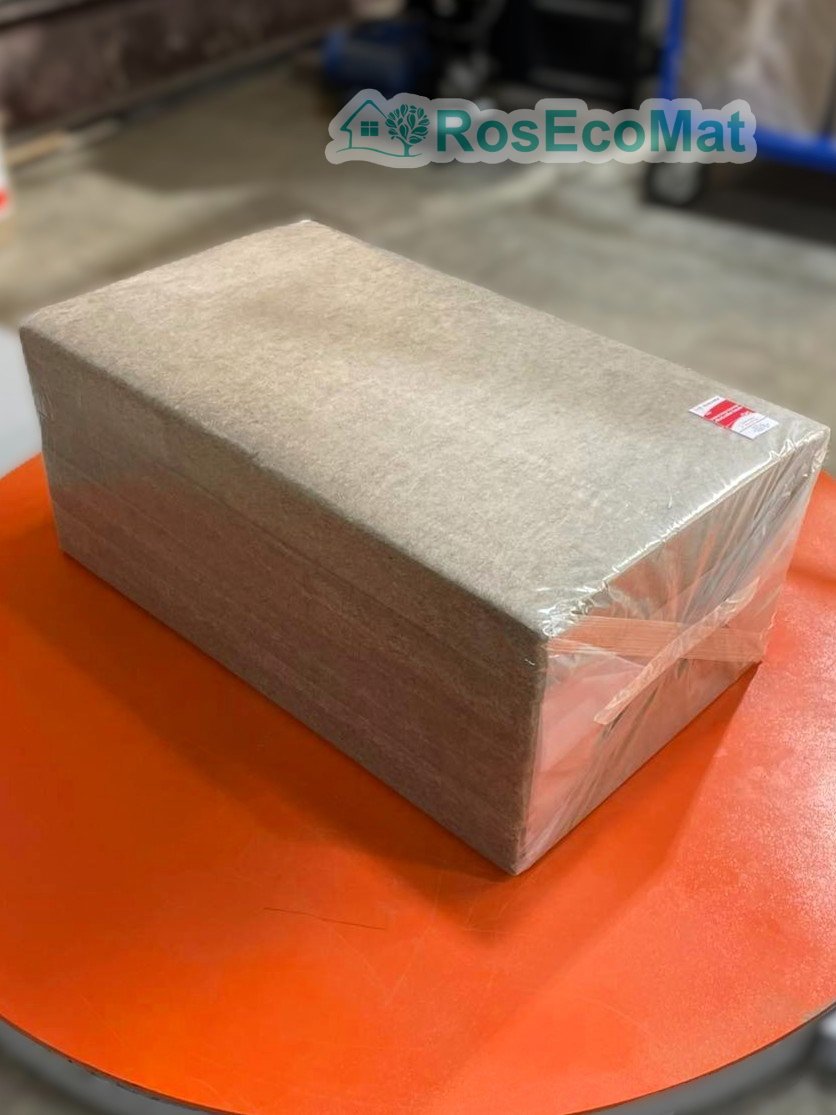
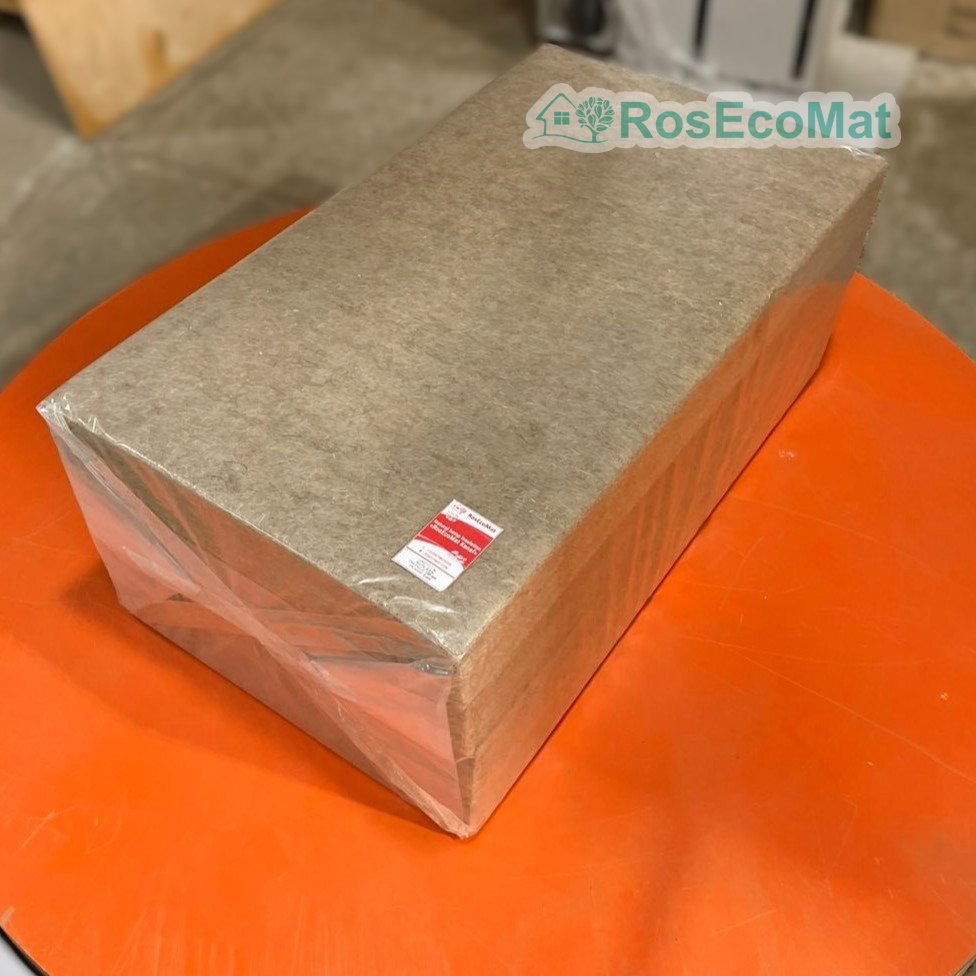
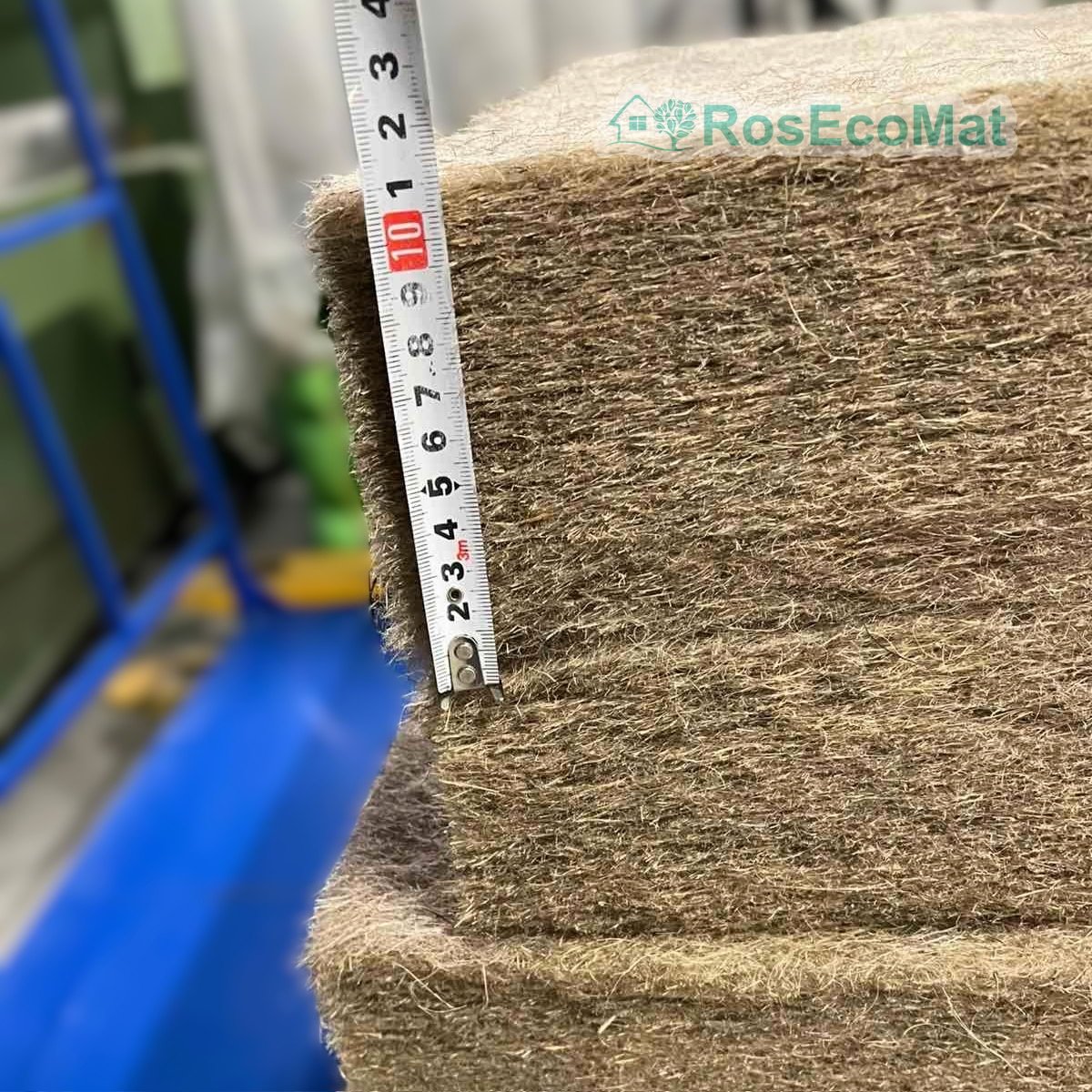
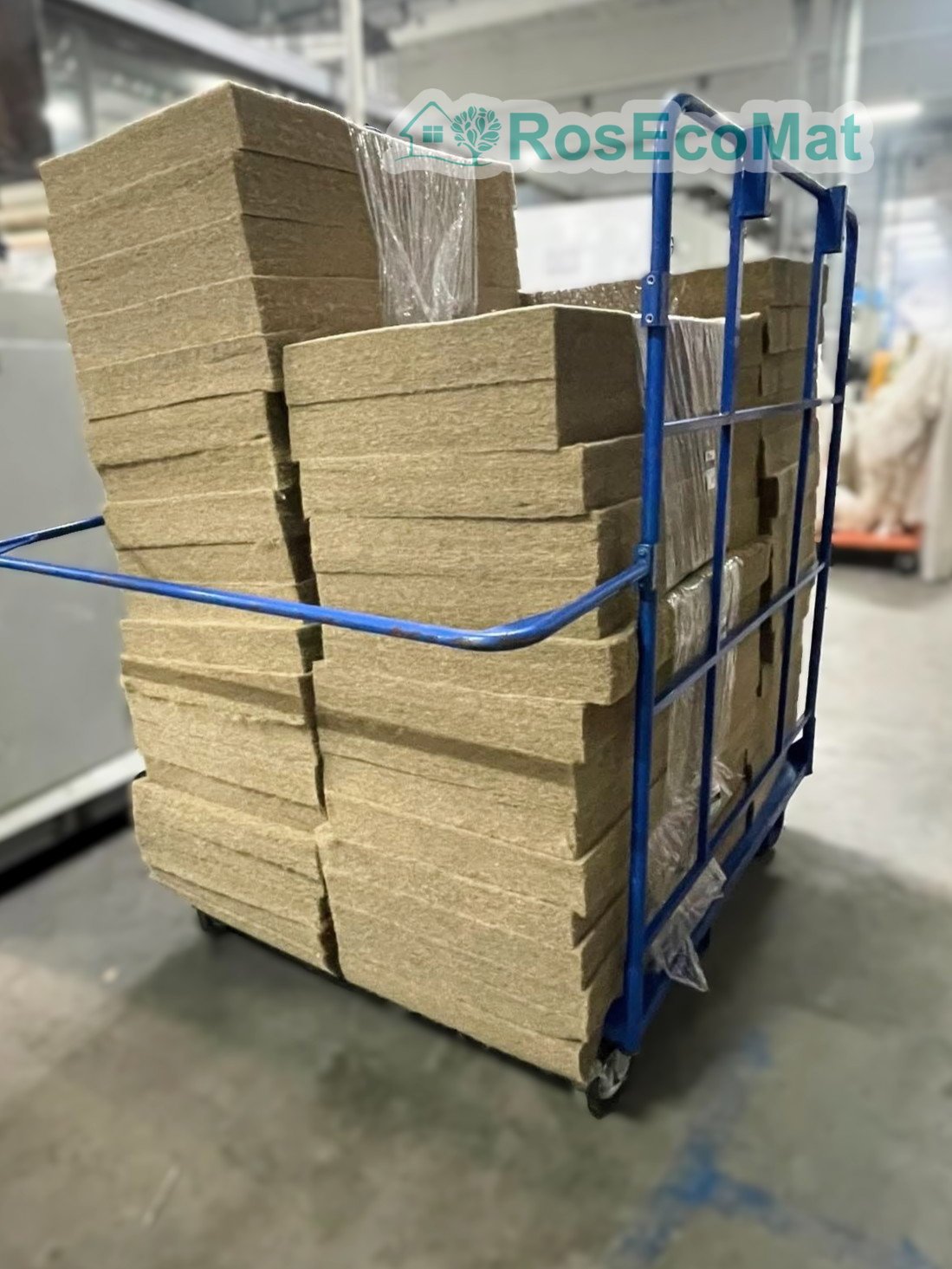

«RosEcoMat Kenaf» is a board insulation material made from renewable plant-based raw materials for non-load-bearing building structures. The material contains no phenol-formaldehyde resins. The resilient boards can be cut to size and installed between timber or metal framing members.
Main advantages of «RosEcoMat Kenaf»:
Applications of «RosEcoMat Kenaf»:

Technical specifications of «RosEcoMat Kenaf»:
Thermal resistance is calculated using the formula R = d/λ for a homogeneous insulation layer. The thermal performance of an entire wall or roof depends on the composition of the building assembly. A 100 mm layer has twice the thermal resistance of a 50 mm layer of the same material.
Installation and operating conditions:
Vapour permeability does not replace protection against atmospheric moisture, leaks or uncontrolled water vapour ingress. To preserve insulation performance, prolonged wetting must be prevented and the building assembly must be able to dry. Membranes should be selected according to climate, the composition of all layers and the direction of drying, preventing moisture condensation within the insulation.
«RosEcoMat» specialists can help calculate the required number of boards, select the appropriate thickness and material for a particular building assembly, clarify order and delivery costs, and provide installation recommendations.
«RosEcoMat Cotton Antisound Light» — lightweight sound-absorbing cotton panels designed to reduce airborne noise and provide enhanced acoustic comfort. Watch movies, listen to music, or play musical instruments — no one will disturb you or your neighbors. These panels are used as an intermediate layer in sound insulation systems for floors, walls, and ceilings in offices and residential buildings. They are also used to create acoustic panels for recording studios.
«RosEcoMat Polyef Vertical» is used for thermal insulation of the exterior and interior walls of your house. It is completely safe for health. It does not release harmful substances or irritating dust. It is vapor-permeable and reliable. It does not change its dimensions over a period of 200 years. Installation is simple.
«RosEcoMat Wall» is an eco-friendly insulation material made from natural flax, designed for thermal insulation of residential and commercial building walls. The soft boards are produced from primary flax fibers with the addition of a small amount of thermally bonded fiber (biopolymer), which provides shape stability and elasticity. The insulation is completely safe for human health, emits no toxins, and does not cause allergies. Packed in polyethylene film, available for sale and delivery starting from one package.
The insulation material is ideally suited for use in vertical wall constructions of houses — both interior and exterior. It is an eco-friendly and durable insulation made from pure hemp
Universal Insulation Material «RosEcoMat Kenaf Antifire». Soft panels are recommended for insulating the interior and exterior walls of houses. The service life of the insulation exceeds 100 years. Safe for
Natural hemp insulation «RosEcoMat Kenaf Light» has a wide range of applications, but is most commonly used for thermal insulation of sloped building structures. It is ideal for insulating sloping